
The landscape of business technology is undergoing a fundamental transformation. For years, organizations have relied on static software and basic artificial intelligence to automate simple, repetitive tasks.
However, a new generation of technology has introduced a radically different paradigm: the AI agent. Moving beyond the limitations of simple text generation, these new systems are capable of independent reasoning, strategic planning, and autonomous action.1
Understanding the AI Agent
At its core, an AI agent is an autonomous software system powered by a large language model that can perceive its environment, make independent decisions, and take actions to achieve a specific goal.2
Unlike traditional software that requires human operators to click buttons or write code to move a process forward, an AI agent dynamically directs its own processes.
When given a high-level objective, such as researching a competitor and compiling a pricing report, the agent does not require step-by-step programming. Instead, it breaks the overarching goal down into smaller tasks. It figures out which tools it needs, executes searches, reads the resulting data, analyzes the information, and compiles the final document without continuous human oversight. This capability is made possible by the advanced nature of modern foundation models, which allow agents to simultaneously process text, voice, video, and code.1
The Core Architecture of an Agent
A business-grade AI agent is constructed using several interconnected layers that separate the raw intelligence from the practical execution of tasks. The brain of the agent is the core language model, which provides natural language understanding and logical reasoning.2
The utility of this brain depends entirely on the tools it can access. The tool layer provides the agent with the ability to manipulate the digital world. Through secure connection protocols, often called the Model Context Protocol (MCP), agents can securely connect to enterprise systems.3 These tools include web search for real-time data, file search for reading internal documents, and function-calling abilities that allow the agent to trigger actions in platforms like Slack, Notion, Google Workspace and others.
Finally, for an agent to act as a cohesive digital worker, it must remember past interactions. Advanced agents utilize sophisticated memory systems to maintain both short-term context and long-term historical preferences, ensuring they do not start from a blank slate every time they initiate a task.
Use Cases
The true value of AI agents lies in their ability to handle complex, cross-departmental workflows. Rather than focusing on highly specific coding assistants, businesses are deploying custom agents to orchestrate daily operations across Human Resources, Marketing, Customer Service, and Information Technology.
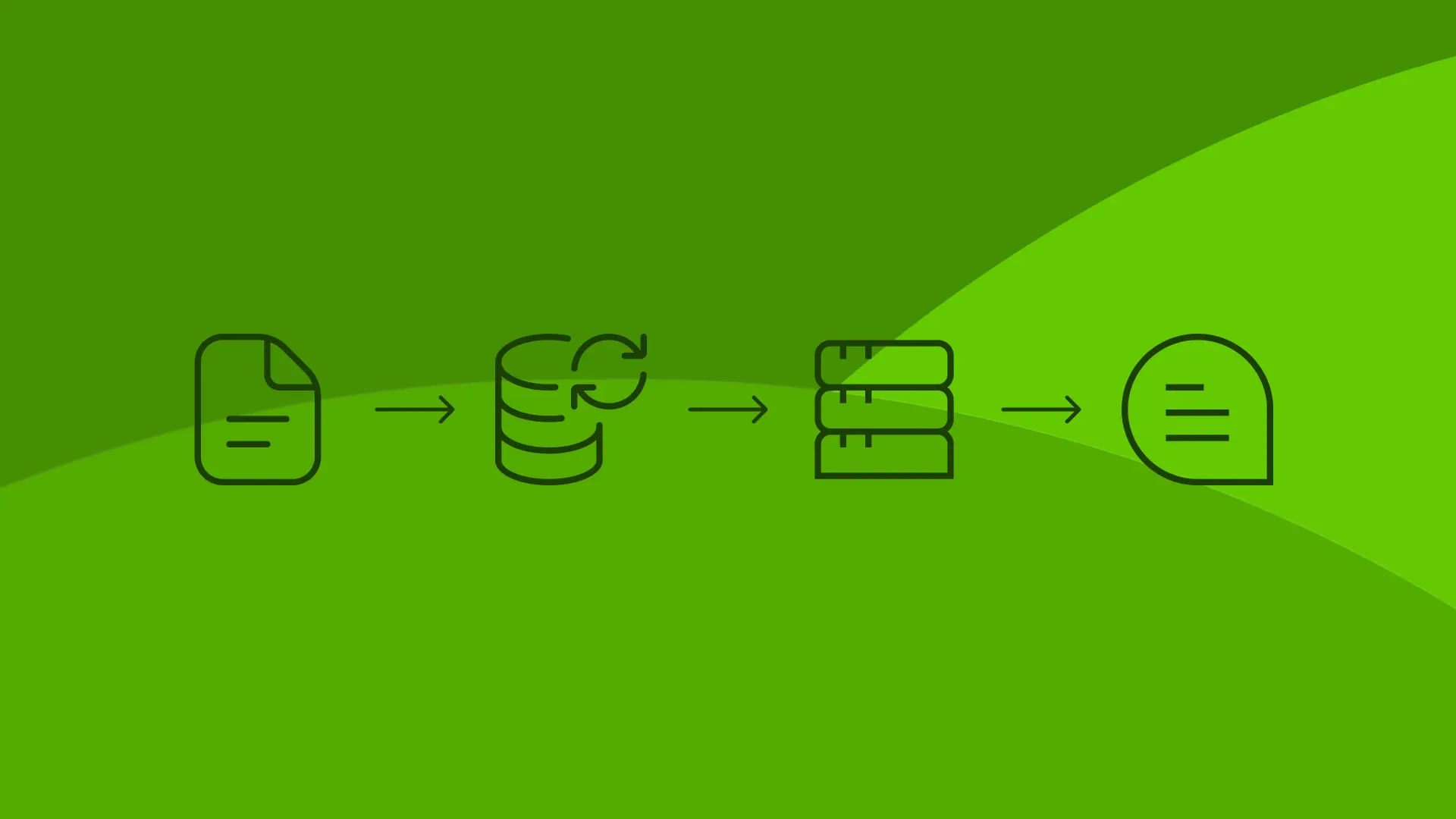
In human resources, the employee onboarding process is notoriously fragmented. Traditionally, personnel must manually download signed offer letters, type details into a database, draft emails to IT for equipment, and schedule meetings. This manual friction often leaves new hires waiting for software access. An AI agent re-engineers this entirely. When a candidate signs a letter, an agent automatically reads the document, checks existing records, creates a pre-hire profile, generates an IT support ticket, and emails all relevant stakeholders.
In customer support, natural conversations powered by agents improve customer satisfaction. Instead of offering links, an agent integrated with a company's systems can interpret the urgency of a message, review the customer's purchase history, resolve routine issues directly, and intelligently route highly sensitive escalations to the correct human specialist.4
In IT and security, agents are deployed to diagnose network connection issues by reading employee directories and checking device statuses autonomously.4 In security operations, they hunt down threats and remediate them instantly, providing a 50 percent faster response time to digital attacks.5
Return on Investment and Business Impact
The transition from traditional software and basic chatbots to autonomous AI agents is driving measurable, large-scale financial impact. Organizations that have transitioned to agentic workflows are experiencing significant shifts in operational efficiency and cost reduction. A recent industry study revealed that 52 percent of corporate executives have already deployed AI agents within their organizations to unlock new business value.6
The adoption of these systems yields rapid financial returns. Approximately 74 percent of executives report achieving a complete return on their investment within the first year of deploying agentic systems.5 For every dollar invested in these AI solutions, organizations are seeing an average return of 3.7 times their investment.7
The productivity gains are equally substantial. Among enterprises tracking these metrics, nearly 40 percent report that their organizational productivity has at least doubled since implementing agents.5 This is largely because agents remove the manual waiting periods between tasks. For example, by utilizing agentic systems connected to cloud databases, global energy companies like AES have successfully reduced the time required for comprehensive safety audits from 14 days to a single hour, cutting associated costs by 99 percent.8 In the financial sector, mortgage companies have doubled the productivity of their underwriters in less than a year, drastically reducing the time it takes to process loans for thousands of clients.9
In customer-facing roles, the impact is felt in both cost reduction and revenue generation. Customer service agents capable of autonomous, end-to-end issue resolution are saving organizations an average of 120 seconds per customer contact.5 Beyond saving time, the intelligent routing and rapid resolution capabilities of these agents have been directly linked to increased customer satisfaction and, in some tracked instances, the generation of millions in additional revenue through optimized service and proactive outreach.
Getting Started with Agents
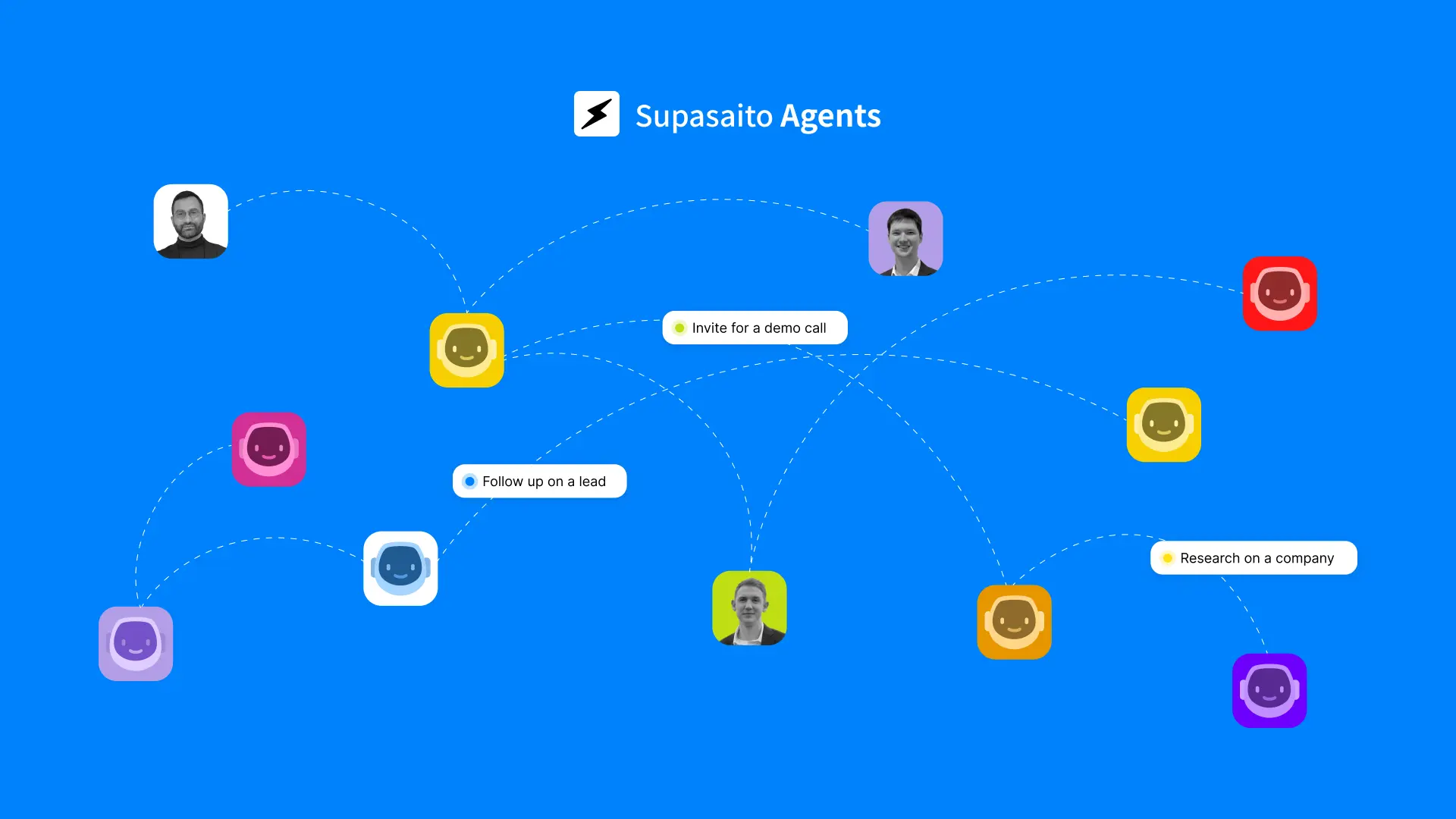
While the market offers numerous pre-built agents for isolated tasks, developing custom, multi-agent workflows has traditionally required deep technical expertise. Supasaito Agents bridges this gap. As a dedicated platform for building and orchestrating autonomous AI agents, it natively equips non-technical users with all the core capabilities—reasoning, memory, planning, and tool execution—needed to deploy enterprise-grade automation.
FInal Words
The evolution of artificial intelligence from simple text generators to autonomous agents marks a critical shift in business operations. AI agents represent a move from software as a passive tool to software as an active digital worker. By combining advanced logical reasoning with the ability to utilize external tools, access corporate memory, and dynamically adjust strategies, these systems are executing complex workflows that previously demanded constant human coordination.











.svg)
